Introduction
Quantum computing is a fascinating and rapidly evolving field that promises to revolutionize how we process information. By harnessing the strange and wonderful principles of quantum mechanics, quantum computers have the potential to solve problems that are currently impossible for classical computers to handle. Understanding quantum computing, however, can be a daunting task due to the abstract nature of the concepts involved. This guide aims to provide a comprehensive yet accessible introduction to quantum computing for beginners. We’ll demystify the main principles, explain the key terms, and shed light on the potential impact of this powerful technology.
What is Quantum Computing?
Quantum computing is a type of computation that uses quantum bits, or “qubits”, instead of the traditional binary bits found in classical computing. A classical bit can be in one of two states – 0 or 1. Quantum bits, however, thanks to the principles of quantum mechanics, can exist in a superposition of states. This means they can represent 0, 1, or both at the same time.
Quantum computers process information using the principles of quantum mechanics, including superposition and entanglement. While classical computers process information in a linear, ordered way, quantum computers have the potential to process a vast number of calculations simultaneously, offering a level of processing power that is exponentially greater than that of classical computers.
Understanding Qubits
A qubit is the fundamental unit of quantum information, the quantum equivalent of the classical binary bit. While a classical bit can exist in one of two states – 0 or 1 – a qubit can exist in a superposition of these states. This means that a qubit can represent 0, 1, or any quantum superposition of those two qubit states. The ability to exist in multiple states gives qubits their unique properties and is what allows quantum computers their massive computational power.
The state of a qubit is described by a combination of two complex numbers. These numbers, known as probability amplitudes, describe the probabilities of the qubit collapsing to either the 0 or 1 state when measured. It’s important to note that due to the strange nature of quantum mechanics, these probability amplitudes can interfere with each other, which leads to the cancellation of some probabilities and the amplification of others. This is the basis for quantum parallelism, which allows quantum computers to evaluate many possibilities at once.
Superposition and Entanglement
Superposition
Superposition is one of the fundamental concepts in quantum mechanics, and it’s what allows qubits to exist in multiple states simultaneously. When we say a qubit is in a ‘superposition of states’, we mean it’s in a state that is a combination of both 0 and 1. This might seem strange from a classical point of view, but in the quantum world, it’s the norm.
However, when a qubit in superposition is measured, it will collapse to one of its basis states (either 0 or 1), and the outcome is probabilistic. This means that before measurement, a qubit can be in any combination of states, but once measured, it is in a definite state. This property allows quantum computers to work on many combinations of bits at once, greatly increasing their computational power.
Entanglement
Entanglement is another strange yet powerful quantum phenomenon. It’s the process where qubits become interconnected and the state of one qubit is dependent on the state of another, no matter the distance between them. This means that a change in the state of one qubit will instantaneously change the state of the other, even if they’re light-years apart.
Entanglement allows for a high degree of parallelism and is key to many quantum algorithms. It also raises interesting questions about information transfer and the fundamental nature of the universe.
Quantum Computing in Action
Quantum computers perform operations using quantum logic gates, similar to how classical computers use classical logic gates. However, unlike classical gates that operate on classical bits, quantum gates operate on qubits, maintaining their quantum nature.
Quantum gates manipulate the state of qubits and can be used to create any quantum algorithm. They’re applied sequentially, creating a ‘quantum circuit’. Some basic quantum gates include the Pauli-X, Y, and Z gates, Hadamard gate, and CNOT gate, each manipulating the qubit states in different ways.
What’s intriguing about quantum gates is that they are reversible. This means that for every quantum operation, there’s an inverse operation that can reverse its effect. This reversibility is one of the many unique aspects of quantum computing.
Bits vs Qubits
The fundamental difference between classical bits and quantum bits, or qubits, lies in the number of states they can represent. Classical bits are binary, existing in either a 0 or 1 state. They are the building blocks of all classical information processing tasks.
Qubits, on the other hand, can exist in a 0 state, a 1 state, or both at the same time due to superposition. Moreover, when multiple qubits are entangled, they can represent an even larger number of states simultaneously, exponentially increasing the information they can hold.
This property not only sets qubits apart from classical bits but also gives quantum computers their extraordinary computational power. Whereas a classical computer with ‘n’ bits can be in one of 2^n states at any given time, a quantum computer with ‘n’ qubits can be in all of its 2^n states at once, thanks to the principles of superposition and entanglement.
Physical Systems for Creating Qubits
Creating stable qubits is one of the key challenges in quantum computing. Various physical systems can be used to create qubits, each with its unique advantages and challenges:
- Trapped ions: Here, individual ions are trapped using electromagnetic fields and manipulated using lasers or microwave radiation. The internal energy levels of the ions form the basis for the qubits. Ion trap systems are currently one of the most successful implementations of qubits, with high fidelity quantum operations.
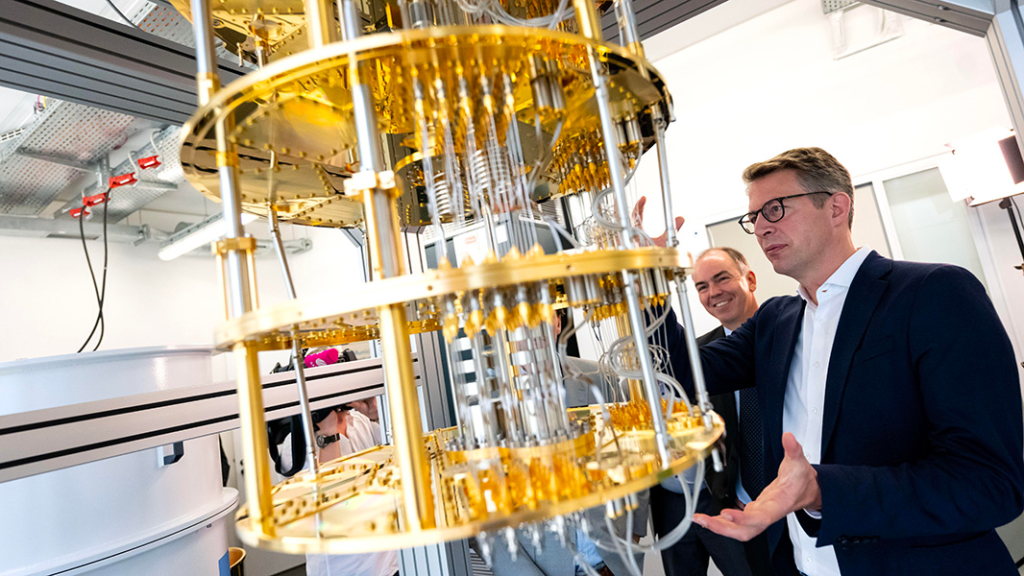
- Superconducting circuits: These are microscale circuits made of superconducting materials. The circuits can carry an electric current without resistance, creating states of energy that can be used to form qubits. Companies like IBM and Google use this technology for their quantum computers.
- Photonic systems: In this approach, the quantum state of a single photon serves as a qubit. The main advantage of this system is that it’s inherently immune to many types of noise, and the qubits can be transmitted over long distances.
Quantum Parallelism and Decoherence
Quantum Parallelism
Quantum parallelism is a direct result of superposition. A quantum computer with ‘n’ qubits in superposition can process 2^n states simultaneously, offering a level of parallel processing power that classical computers can’t match. This allows a quantum computer to perform a large number of computations at once, leading to a potential exponential speedup for certain problems.
Quantum Decoherence
Decoherence, however, is a challenge as it refers to the tendency of qubits to lose their quantum state due to interaction with their environment.
Quantum Teleportation and Encryption
Quantum Teleportation
Quantum teleportation, while it doesn’t involve physical movement, refers to the transfer of quantum states between locations. This intriguing concept has significant implications for secure communication.
Encryption
Quantum computing poses potential risks and opportunities for encryption. It could break many current encryption algorithms but also pave the way for new, secure quantum encryption methods.
Building a Quantum Computer: The Challenges
Creating a practical, scalable quantum computer is a significant scientific and engineering challenge. Some of the key difficulties include:
- Qubit Quality: Qubits are fragile and maintaining their quantum state is difficult. Any interaction with the environment can cause them to lose their quantum properties, a process known as decoherence.
- Error Correction: Quantum computations are highly susceptible to errors, more so than classical computations. Implementing robust error correction methods that don’t require an excessive number of qubits is a major challenge.
- Scalability: Scaling up the number of qubits while maintaining their quality and minimizing errors is another significant challenge. As of now, the number of qubits in quantum computers is still relatively small due to these difficulties.
Quantum Programming

As quantum computers are fundamentally different from classical computers, they require new programming languages and tools. Here are a few significant ones:
- Q#: Developed by Microsoft, Q# is a domain-specific programming language used for expressing quantum algorithms. It’s integrated into the .NET framework and Visual Studio, making it accessible to developers familiar with the Microsoft ecosystem.
- Qiskit: Developed by IBM, Qiskit is an open-source quantum computing framework for Python. It includes tools for creating and manipulating quantum programs and running them on real quantum computers through IBM Quantum Experience.
- Cirq: Created by Google, Cirq is another Python library for creating, editing, and invoking Noisy Intermediate Scale Quantum (NISQ) circuits.
Quantum Computing: The Industry Impact
Quantum computing has the potential to revolutionize many industries, including:
- Pharmaceuticals: Quantum computers could be used to simulate molecular interactions at an unprecedented level of detail, speeding up drug discovery.
- Logistics: Optimization problems like route planning, which can be difficult for classical computers, could be solved more efficiently using quantum computers.
- Finance: Quantum computing could enable faster and more complex financial modeling, helping companies better manage risk and make more informed decisions.
- Cybersecurity: Quantum computers could break many of the encryption algorithms currently in use, requiring the development of new quantum-resistant encryption methods.
Learning Quantum Computing
Understanding quantum computing requires a strong foundation in linear algebra, probability, and complex numbers. However, don’t be discouraged if you don’t have a physics or math background. Many resources exist to help beginners dive into the field:
- Online Courses: Platforms like Coursera, edX, and Udacity offer courses on quantum computing. These courses are usually designed for learners at all levels and often include hands-on exercises.
- Books: There are several excellent books on quantum computing for beginners, such as “Quantum Computing for Computer Scientists” and “Quantum Computing: An Applied Approach.”
- Quantum Coding Kits: Quantum programming libraries like Qiskit, Q#, and Cirq offer extensive documentation and tutorials to get you started with quantum programming.
Conclusion: The Future of Quantum Computing
Though still in its early stages, quantum computing holds promise for tackling complex problems that are beyond the reach of today’s computers. As we overcome challenges, we move closer to a future where quantum computing could redefine the digital world. Keep learning and stay part of this exciting journey!

 Turhan Can Kargın